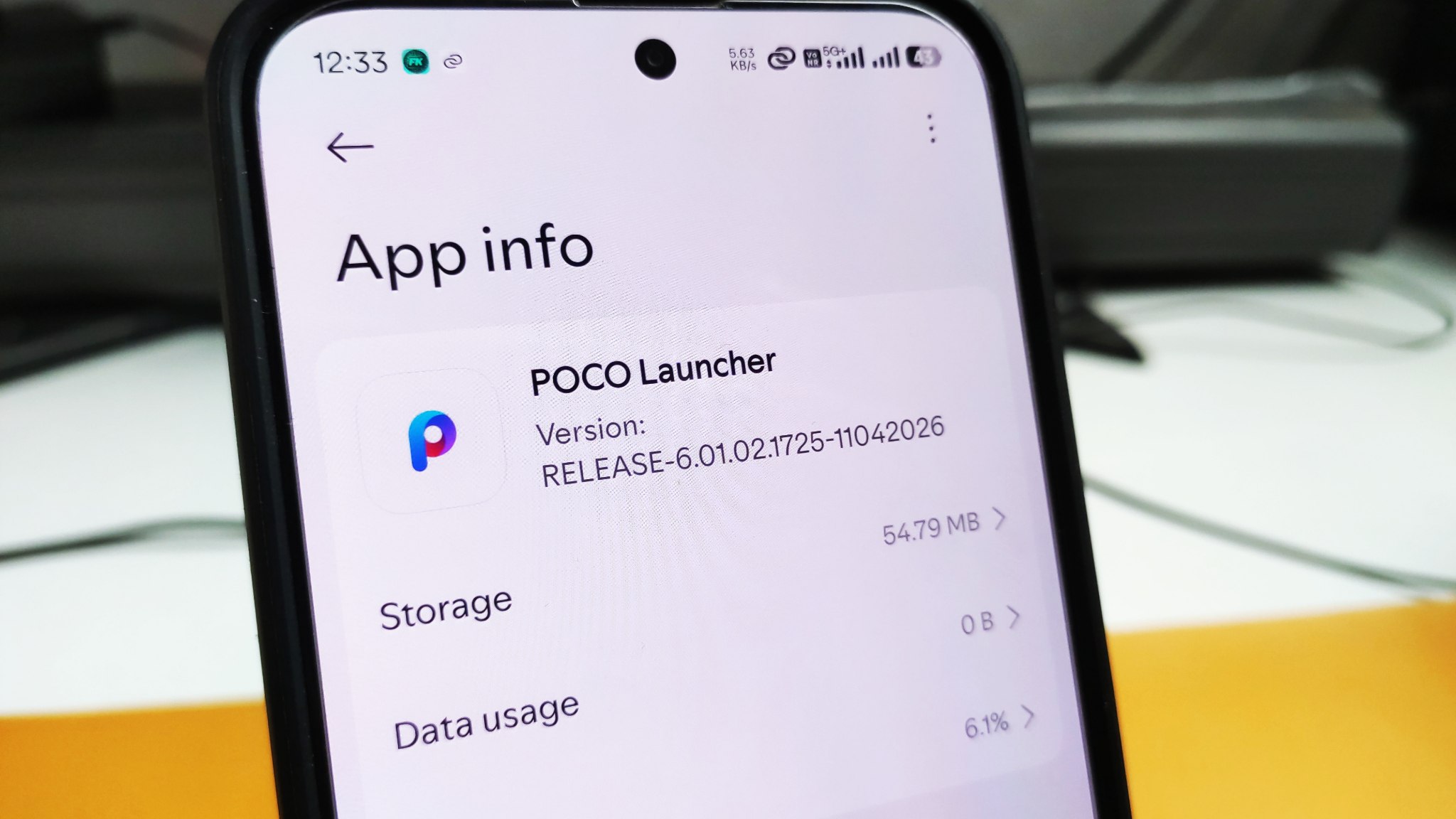

Xiaomi is quietly moving toward a single, unified launcher experience, and recent system software developments strongly indicate that POCO Launcher and HyperOS Launcher are becoming one. What once felt like two visually and functionally different launchers is now converging into a shared HyperOS-based launcher, designed to simplify development and improve the user experience across POCO and Xiaomi devices.
This shift is already visible on POCO Pad tablets, which now use the same launcher application as Xiaomi Pad models, confirming Xiaomi’s long-term plan to unify its software ecosystem.
POCO Launcher and HyperOS Launcher Share the Same Version and Codebase
One of the strongest signs of launcher unification is version number alignment. Recent POCO Launcher builds now match HyperOS Launcher versions exactly, suggesting that both apps are maintained from the same source code.

In addition, the APK package size is nearly identical, further reinforcing that POCO and Xiaomi launchers are no longer separate products. From a software development perspective, this allows Xiaomi to push performance optimizations, UI improvements, and bug fixes simultaneously to both POCO and Xiaomi devices.
Visual Differences Between POCO and HyperOS Launchers Are Disappearing
Earlier, POCO devices—especially tablets—featured a distinct launcher icon as part of their brand identity. However, newer updates have removed this distinction entirely.
- POCO Pad launcher icon now matches HyperOS Launcher
- UI animations and layouts are identical
- No visible functional differences remain
This visual unification confirms Xiaomi’s strategy to deliver a consistent user interface across smartphones, tablets, and accessories under HyperOS.
Why Xiaomi Is Moving Toward a Unified HyperOS Launcher
Maintaining two separate launchers with the same features leads to duplicate development efforts and slower update cycles. By unifying POCO Launcher with HyperOS Launcher, Xiaomi can:
- Reduce software fragmentation
- Accelerate feature rollouts
- Improve system stability
- Deliver faster bug fixes
Future POCO Pad devices are expected to ship with HyperOS Launcher by default, ensuring users receive the latest features alongside Xiaomi Pad users.
What a Unified Launcher Means for POCO Users
For POCO users, this change brings several benefits:
- Faster updates and fewer bugs
- Improved performance and smoother animations
- A consistent HyperOS experience across all devices
- Long-term software support aligned with Xiaomi’s ecosystem
Rather than maintaining brand-specific launchers, Xiaomi can now focus on refining one optimized launcher experience.
Final Verdict: POCO Launcher Is Merging Into HyperOS
The evidence strongly suggests a gradual and well-managed transition, not an abrupt shutdown of POCO Launcher. Xiaomi is clearly preparing its user base for a unified HyperOS launcher ecosystem, aligning smartphones, tablets, and Bluetooth accessories under a single UI vision.
For users, this evolution signals a more stable, faster, and future-ready Xiaomi software experience in 2025 and beyond.

For the latest information, join our HyperOS 3 Telegram channel for updates and XiaomiHSU for the latest System Apps.

Pingback: POCO Launcher HyperOS 3 Update Brings New Animations and App Finder Gesture - Chroma Tech YT